
Nestled in the Hoang Lien Son mountain range of Northern Vietnam, Sapa is one of the country's most spectacular travel destinations. Famous for its terraced rice fields, mist-covered mountains, ethnic minority villages, and breathtaking trekking routes, Sapa offers travelers a unique blend of nature, culture, and adventure.
This complete Sapa Travel Guide helps visitors discover the best attractions, activities, transportation options, and practical travel advice for exploring this remarkable mountain region.

Why Visit Sapa?
Sapa is unlike any other destination in Vietnam. While many travelers associate Vietnam with beaches and bustling cities, Sapa showcases dramatic mountain scenery, cool temperatures, and centuries-old ethnic traditions.
As one of the highlights featured in our Vietnam Destinations guide, Sapa attracts hikers, photographers, nature lovers, and cultural explorers from around the world.
Best Time to Visit Sapa
Sapa offers different experiences throughout the year.
Spring (March – May)
Spring brings pleasant temperatures, blooming flowers, and ideal trekking conditions.
Summer (June – August)
The rice terraces become vibrant green, creating some of the most beautiful landscapes in Vietnam.
Autumn (September – October)
This is the most popular season as the rice fields turn golden before harvest.
Winter (November – February)
Cool temperatures and occasional frost create a completely different mountain atmosphere.
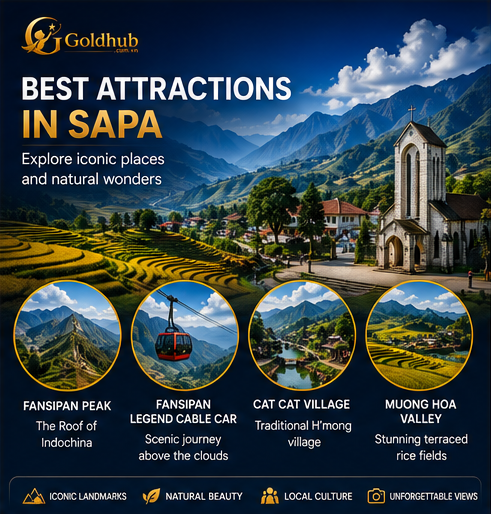
Top Attractions in Sapa
Fansipan Mountain
Known as the "Roof of Indochina," Fansipan stands at 3,143 meters and is the highest mountain in Vietnam. Visitors can reach the summit via cable car or guided trekking tours.
Muong Hoa Valley
This picturesque valley is home to some of Vietnam’s most famous rice terraces and scenic trekking routes.
Cat Cat Village
Located just outside Sapa Town, Cat Cat Village offers visitors a glimpse into the traditions of the Hmong people.
Ta Van Village
Ta Van is one of the most popular destinations for trekking and homestay experiences.
Love Waterfall
Surrounded by lush forests, Love Waterfall provides a peaceful natural escape for travelers.

Sapa Trekking Guide
Trekking is one of the main reasons travelers visit Sapa.
Easy Trekking Routes
- Cat Cat Village Trek.
- Ham Rong Mountain Walk.
- Sapa Town Exploration.
Moderate Trekking Routes
- Muong Hoa Valley Trek.
- Lao Chai Village Trek.
- Ta Van Village Trek.
Advanced Trekking Routes
- Fansipan Summit Trek.
- Hoang Lien National Park Trails.
Many visitors choose local guides to gain deeper cultural insights and support local communities.

Experience Ethnic Minority Culture
Sapa is home to several ethnic groups including the Hmong, Dao, Tay, Giay, and Xa Pho communities.
Visitors can experience traditional lifestyles through village tours, handicraft workshops, local markets, and homestay programs.
These cultural experiences make Sapa one of Vietnam’s most unique travel destinations.
Food Experiences in Sapa
Sapa's mountain cuisine differs significantly from dishes found in Vietnam's major cities.
Travelers interested in local culinary experiences can also explore our Food & Cooking Classes section.
Must-Try Sapa Dishes
- Thang Co.
- Salmon Hotpot.
- Black Chicken.
- Bamboo Sticky Rice.
- Grilled Mountain Pork.
- Fresh Mountain Vegetables.
How to Get to Sapa
Most travelers begin their journey from Hanoi.
Transportation options include:
- Overnight Trains.
- Luxury Limousine Buses.
- Private Transfers.
- Rental Vehicles.
Learn more through our Transportation guide.
Private transportation solutions are available through our Car Rental Services section.
Where to Stay in Sapa
Sapa Town Center
Ideal for first-time visitors who want easy access to restaurants, transportation, and attractions.
Muong Hoa Valley
Offers spectacular views of rice terraces and mountain scenery.
Ta Van Village
Perfect for travelers seeking authentic cultural experiences and traditional homestays.
Suggested Sapa Itinerary
Planning your route carefully helps maximize your experience.
Explore additional travel routes through our Travel Itineraries.
3-Day Sapa Itinerary
- Day 1: Sapa Town, Cat Cat Village, local market.
- Day 2: Muong Hoa Valley Trek, Lao Chai and Ta Van Villages.
- Day 3: Fansipan Cable Car and departure.
Travel Tips for Visiting Sapa
Mountain weather can change rapidly, so preparation is important.
Additional advice is available through our Travel Tips.
- Bring comfortable trekking shoes.
- Pack layers for changing temperatures.
- Carry rain protection during wet seasons.
- Book accommodations in advance during peak periods.
- Respect local customs and traditions.

Explore More of Northern Vietnam
Many travelers combine Sapa with Hanoi and Ha Long Bay for a complete Northern Vietnam adventure.
Continue planning your journey through our Hanoi Travel Guide and Ha Long Bay Travel Guide.
For a complete overview of Vietnam, visit our Vietnam Travel Guide.